
Local Culture
Rujak Cingur: Learning to Love the Mix
Fruit, vegetables, petis, and cingur meet in a dish that refuses simple categories.
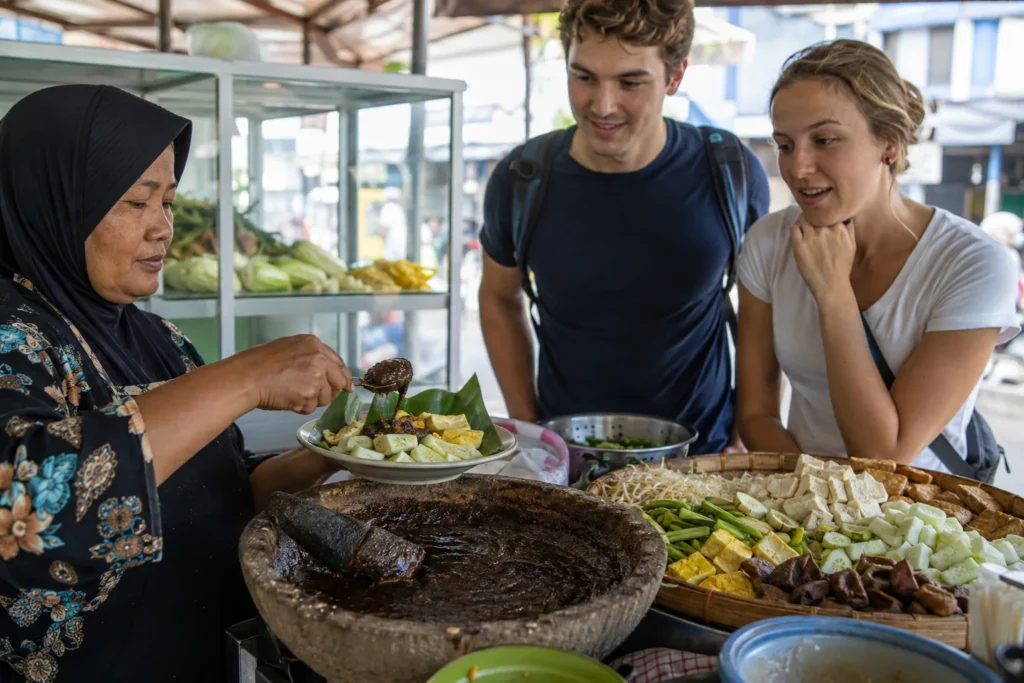
Rujak cingur brings together ingredients that many first-time visitors would not expect on one plate: fruit, vegetables, rice cake, tofu, tempeh, a dark dressing based on petis, and slices of cingur, usually boiled beef snout. The mixture is central to the dish. Sweet, savoury, spicy, fresh, chewy, and fermented flavours are meant to meet rather than stay separate.
Know what you are ordering
The word cingur refers to the beef component, while petis is a concentrated fermented seafood paste used widely in East Javanese cooking. If you do not eat beef or seafood, ask before ordering. Removing only the cingur does not make the dressing vegetarian. “Tanpa cingur” means without cingur; “Apakah petisnya dari udang?” asks whether the petis is shrimp-based.
Spice level is usually adjustable. “Tidak pedas” asks for no chilli, “sedikit pedas” for mild heat, and “pedas” for a hotter serving. Kitchens and portions vary, so treat the exchange as a conversation rather than a fixed script.
Why the mixture matters
Rujak cingur is closely associated with Surabaya and East Java. Its ingredients reflect multiple textures, food traditions, and ways of preserving flavour. The dish rewards patience: one bite may emphasise fruit and peanut, another petis and vegetables. Mixing thoroughly is part of experiencing the intended balance.
In December 2025, Rujak Cingur Surabaya was inscribed by UNESCO on the Representative List of the Intangible Cultural Heritage of Humanity. Recognition does not turn it into a museum object. It remains a food prepared, sold, adapted, debated, and enjoyed in everyday life.
Approach unfamiliar food without spectacle
It is fine to be uncertain. Ask what an ingredient is, request a smaller portion, and taste thoughtfully. Avoid exaggerated reactions that make someone’s familiar food seem strange for entertainment. A better question is: “How do local people know when a rujak cingur is well balanced?” The answer may teach you more than any ingredient list.
Continue exploring
Related places and experiences.
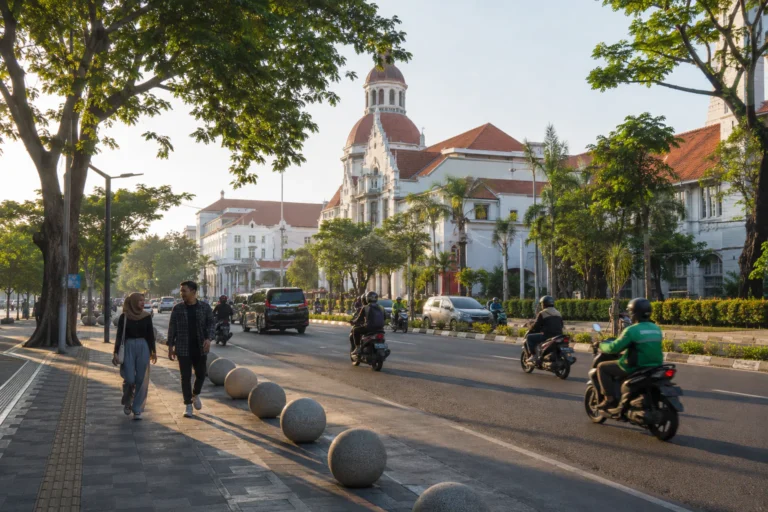
Surabaya
Hallo Indonesia is preparing its first guided cultural and everyday-language experience in Surabaya. Public interest is open while program details remain under review.
Tell us which city matters to you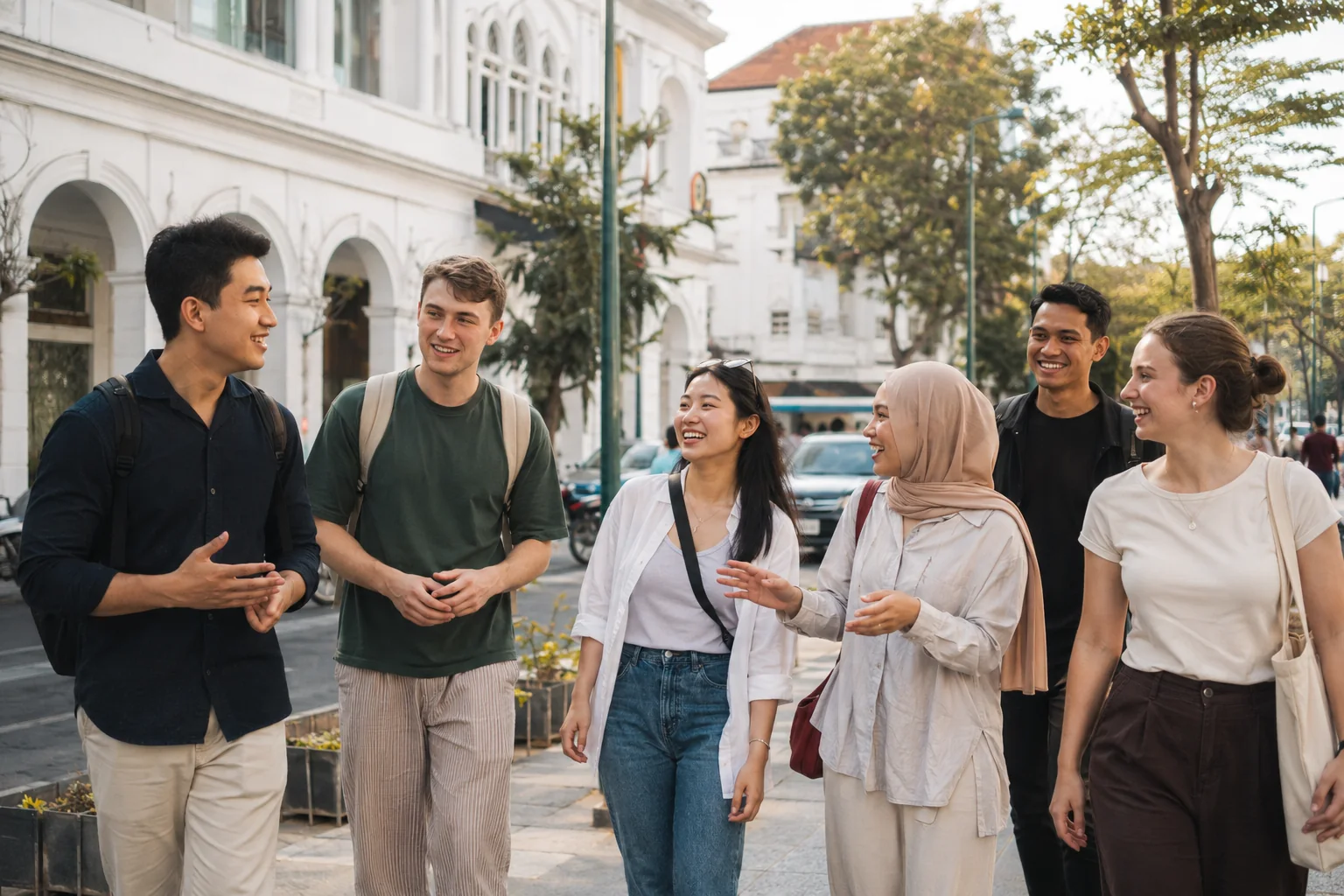
Mlaku-Mlaku Nang Suroboyo
Prepare useful language, complete real city Missions, meet local people, and bring every skill together in Pujon Kidul.
- Duration
- 1 month / 4 weekends
- Format
- Immersive Indonesian language experience
Keep following your curiosity
Related Stories

Tunjungan After the Postcard: How to Read Surabaya Through One Street
A people-first walk through Tunjungan: architecture, memory, everyday commerce, and the small courtesies that help visitors experience a living Surabaya street.
Read Story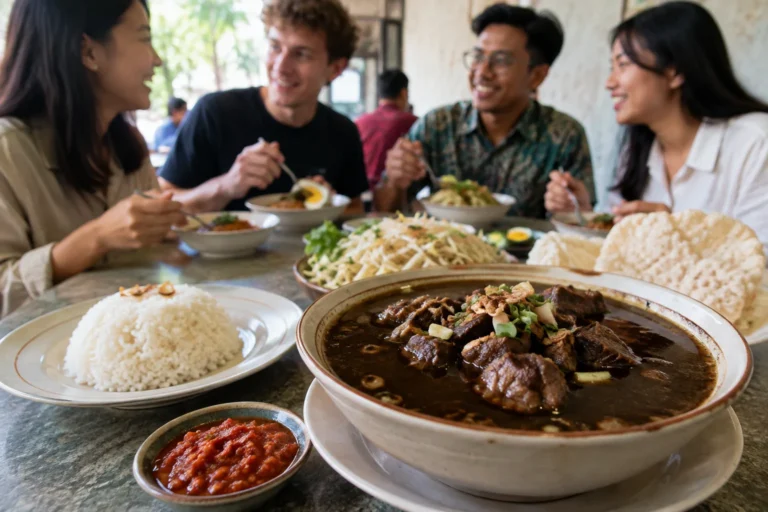
Rawon Surabaya: More Than a Bowl of Black Soup
Understand the keluak, accompaniments, and social rituals that make rawon one of Surabaya’s most recognisable everyday foods.
Read Story
Surabaya as Kota Pahlawan: Beyond a Slogan
Explore why Surabaya is called Kota Pahlawan and how visitors can approach monuments, museums, and local memory with care.
Read StoryExperience the context