Local Culture
Madura: Sate, Salt, and Community Beyond the Stereotypes
An island cannot be understood through one dish, one race, or one borrowed stereotype.
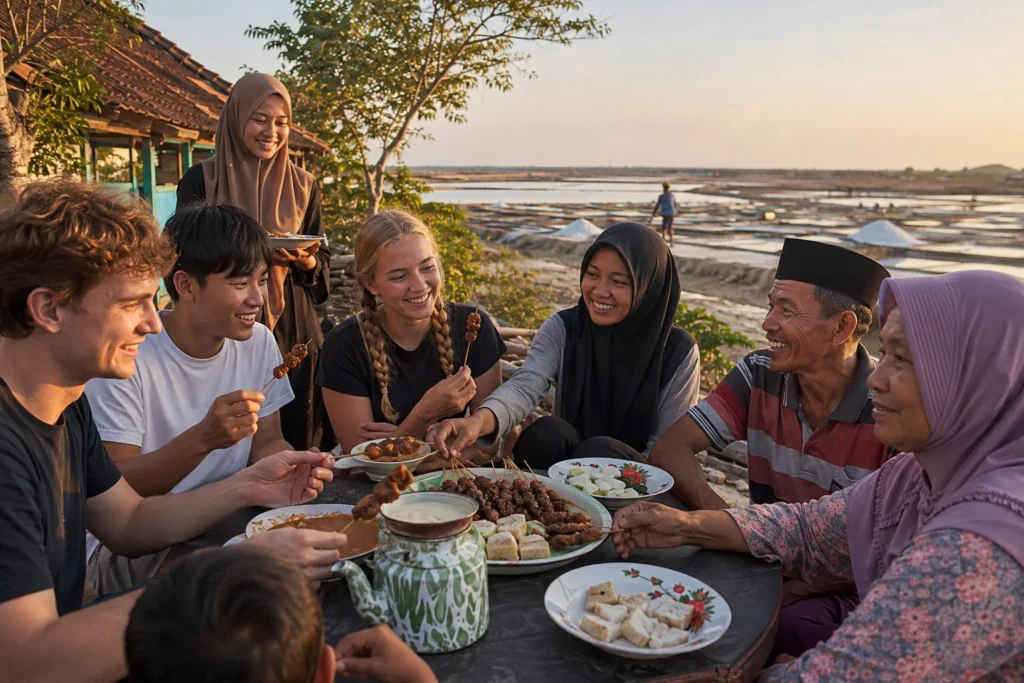
Madura is often introduced through sate Madura and karapan sapi, the famous bull-racing tradition. Both are meaningful, but neither can represent the whole island. Madura includes different regencies, coastal and agricultural communities, religious learning centres, markets, craft traditions, migration histories, and a language with its own levels and regional variation.
Follow sate back to the people
Sate Madura is found across Indonesia, which can make its origin feel invisible. On Madura, ask how a seller prepares the peanut sauce, what meat is used, and whether the style differs from versions in other cities. The answer may connect food to family business, mobility, and the networks through which Madurese vendors built livelihoods far from home.
See salt as labour and landscape
Salt production has shaped parts of Madura’s economy and visual landscape, particularly around Sumenep and other coastal areas. Salt ponds depend on weather, water management, physical labour, infrastructure, and market conditions. Visit only through appropriate local access, stay off working pond edges, and ask before photographing workers.
Approach karapan sapi with context
Bull racing involves preparation, prestige, community participation, and local debate. Do not reduce it to speed or spectacle. Follow event safety barriers and local guidance, and avoid making broad claims about animal treatment or cultural meaning after one observation. Ask organisers or residents how the event is prepared and what it means locally.
Let people complicate your assumptions
Madura is sometimes described through stereotypes about temperament. Avoid treating personality as an ethnic characteristic. Direct speech, humour, hospitality, religious practice, and social expectations vary between people and situations. Learn a few Indonesian phrases, listen for Madurese language, and let individuals explain themselves.
A better Madura story connects food to migration, salt to labour, traditions to community decisions, and travel to human relationships. The island becomes more vivid when you stop expecting one simple identity.
Keep following your curiosity
Related Stories
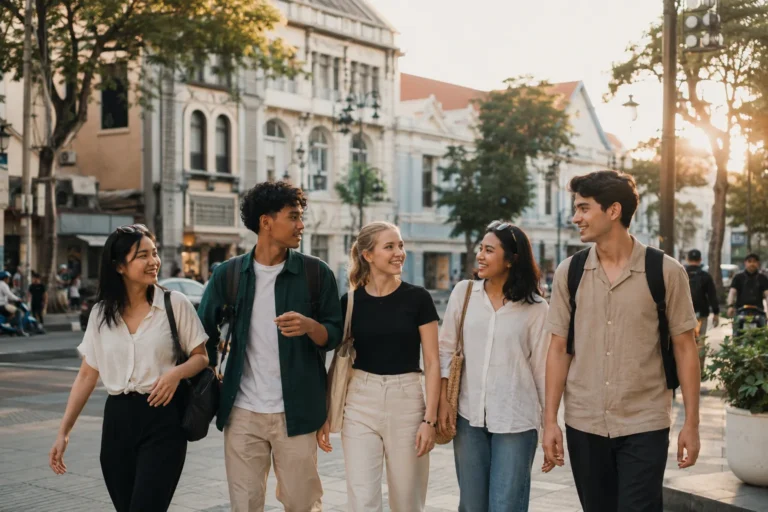
Tunjungan After the Postcard: How to Read Surabaya Through One Street
A people-first walk through Tunjungan: architecture, memory, everyday commerce, and the small courtesies that help visitors experience a living Surabaya street.
Read Story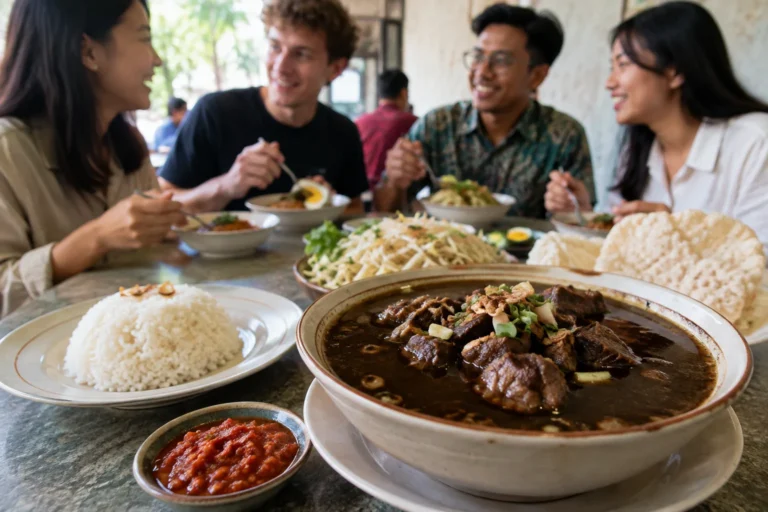
Rawon Surabaya: More Than a Bowl of Black Soup
Understand the keluak, accompaniments, and social rituals that make rawon one of Surabaya’s most recognisable everyday foods.
Read Story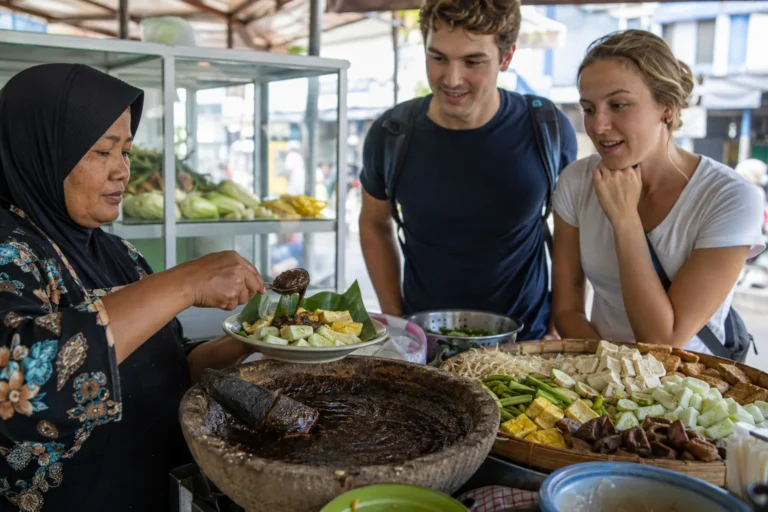
Rujak Cingur: Learning to Love the Mix
A respectful introduction to Surabaya’s rujak cingur, including ingredients, ordering language, dietary questions, and why its mixture matters.
Read StoryExperience the context