
City Guide
Blitar, Bung Karno, and the Work of Public Memory
A city visit becomes meaningful when commemoration leads to questions, not only photographs.
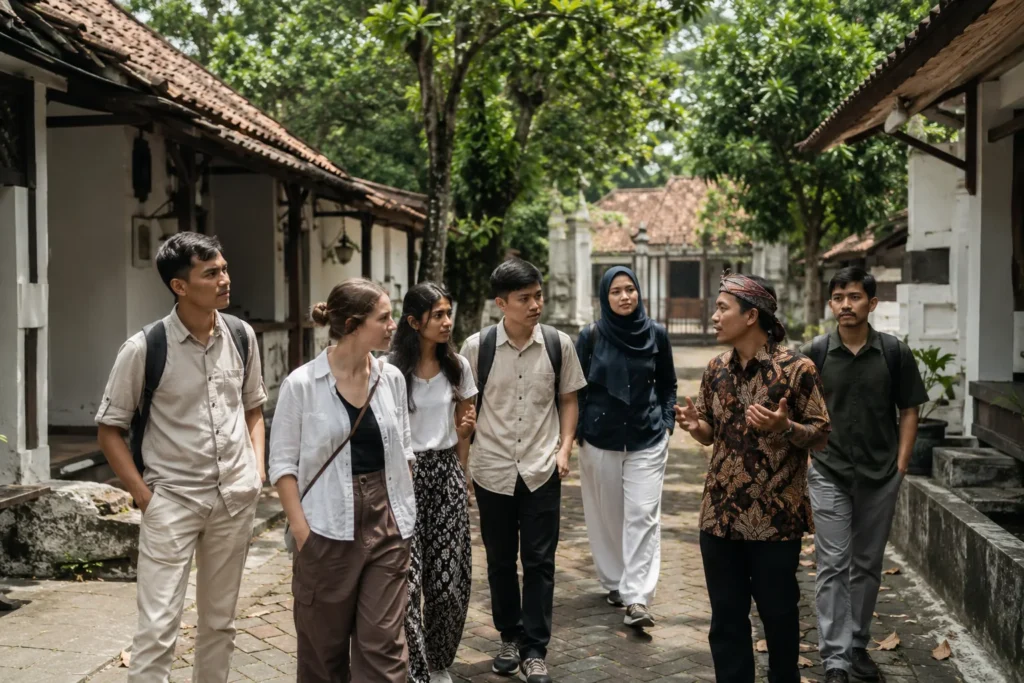
Blitar is closely associated with Sukarno, Indonesia’s first president, commonly known as Bung Karno. His grave, library, museum, and surrounding public spaces draw visitors who want to understand national history and pay respect. The connection is important, but Blitar is not only a memorial destination. It is also a living East Javanese city with neighbourhoods, schools, markets, religious life, creative activity, and local history beyond one individual.
Enter the memorial with intention
The Bung Karno complex can be busy with families, school groups, pilgrims, researchers, and tourists. Dress respectfully, follow site instructions, keep paths clear, and use a measured voice around the grave. Photography rules may differ between areas, so ask before taking close images of ceremonies or visitors.
Use the museum to build questions
Exhibitions can introduce Sukarno’s political life, ideas, personal history, and role in Indonesian independence. No museum can contain every interpretation. Note which periods and voices are emphasised, then continue reading from credible sources. History becomes stronger when you compare evidence rather than search for one heroic sentence.
Notice how national memory becomes local life
Memorial visitors support transport, food, accommodation, guides, publishing, and small businesses. Ask local residents how commemorative events affect the city and what they wish visitors understood about Blitar. The answers may move quickly from national history to everyday concerns.
Make room for the wider city
Spend time beyond the main complex. Visit a market, try local food, learn a neighbourhood name, or explore another cultural site with appropriate guidance. This avoids treating Blitar as a single-purpose stop and allows ordinary city life to remain visible.
Public memory is active work. People choose what to preserve, teach, question, and pass forward. A thoughtful Blitar visit honours Bung Karno while also recognising the city and residents who continue carrying—and debating—that history today.
Keep following your curiosity
Related Stories
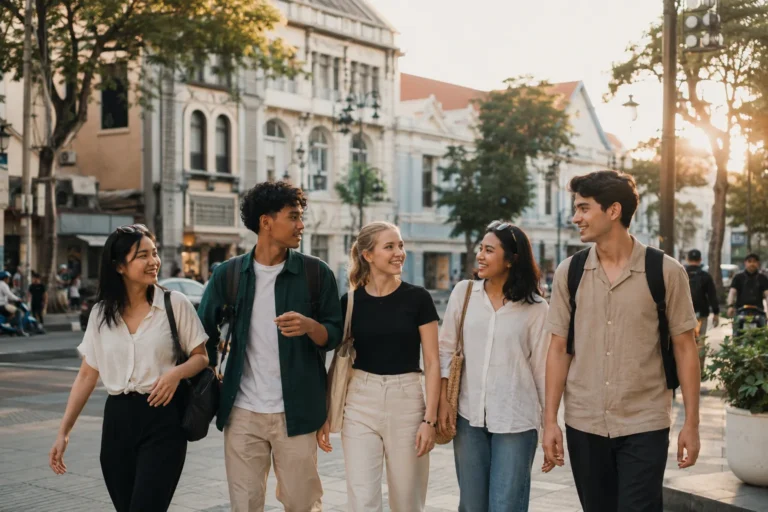
Tunjungan After the Postcard: How to Read Surabaya Through One Street
A people-first walk through Tunjungan: architecture, memory, everyday commerce, and the small courtesies that help visitors experience a living Surabaya street.
Read Story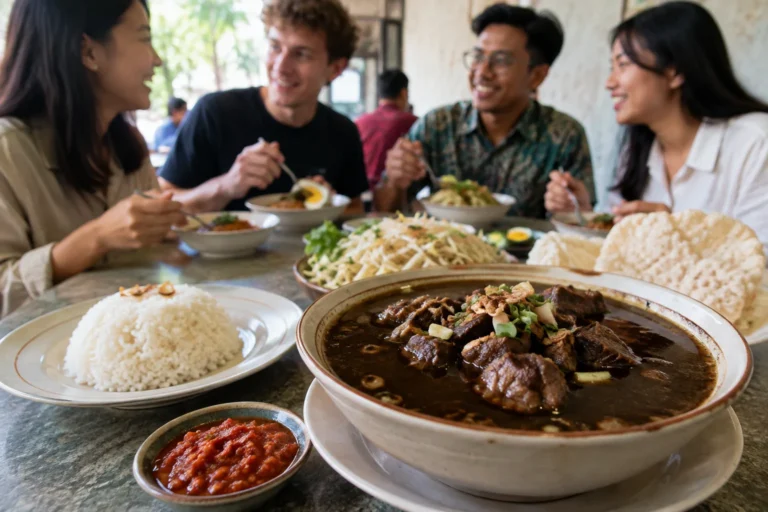
Rawon Surabaya: More Than a Bowl of Black Soup
Understand the keluak, accompaniments, and social rituals that make rawon one of Surabaya’s most recognisable everyday foods.
Read Story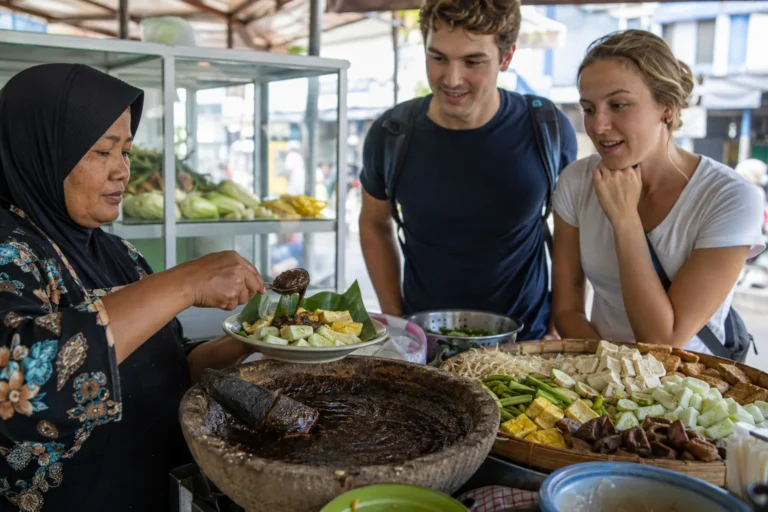
Rujak Cingur: Learning to Love the Mix
A respectful introduction to Surabaya’s rujak cingur, including ingredients, ordering language, dietary questions, and why its mixture matters.
Read StoryExperience the context